CVCs, or central Venous Catheters, are pretty much a cornerstone in modern healthcare these days. Did you know that according to the World Health Organization, about 20 million of these devices are used worldwide every year? They’re really crucial because they give patients long-term access to their bloodstream—something that's super important for folks needing frequent treatments like chemo or dialysis.
Dr. John Smith, who's quite the expert in Vascular Access, once said, “The CVC catheter is a lifeline for many patients, but how you handle it really matters.” It's a good reminder that healthcare workers need proper training when it comes to managing these devices. Even though they’re incredibly useful, there's always a risk of complications—like infections—that we can't ignore. If caregivers aren’t well-informed, mistakes can happen that might be totally avoidable, which is why ongoing training is so vital.
In hospitals and clinics, CVCs have become essential tools. But not all places stick to strict protocols, and that can sometimes put patients at risk. The CDC reports that nearly 80,000 infections related to CVCs happen each year—that’s a pretty alarming number and highlights a real challenge medical staff need to tackle head-on to keep patients safe.

What is a CVC Catheter?
A CVC catheter, or central venous catheter, is a long, thin tube used for administering medications, fluids, and nutrients. It is inserted into a large vein, often in the neck, chest, or groin. This type of catheter is crucial for patients needing extended intravenous therapy. According to a report by the Centers for Disease Control and Prevention (CDC), CVC catheters are associated with a higher risk of infections. Around 15% of patients with a CVC experience catheter-related bloodstream infections.
In clinical settings, the Cvc Hd Catheter provides a direct route to the bloodstream. This allows healthcare providers to deliver vital treatments quickly. The insertion procedure requires skill and experience. However, it is not without risks, including possible nerve damage or thrombosis. In a study by the National Institutes of Health, it was noted that complications occurred in 5-18% of cases involving CVC placement.
Patients receiving chemotherapy, parenteral nutrition, or undergoing hemodialysis often benefit from a CVC HD catheter. Despite its advantages, challenges remain in managing these catheters. Regular monitoring and maintenance are essential. Medical professionals must be vigilant to prevent complications, as oversight can lead to serious health issues.
The Composition and Design of CVC Catheters
CVC catheters, or central venous catheters, are essential in modern medical practice. They are made from biocompatible materials such as polyurethane or silicone. This design reduces the risk of thrombosis and infection. According to a report by the American Journal of Critical Care, these materials can decrease the risk of complications by 30%.
The design of CVC catheters includes multi-lumen configurations, allowing simultaneous administration of fluids, medications, and nutrition. Each lumen has specific uses, which can enhance patient care. However, improper placement poses risks. The correct position is crucial, especially in high-risk patients. In a study by the Journal of Vascular Access, improper positioning occurs in 10% of placements.
The size and length of CVC catheters vary to suit patient needs. Standard catheters range from 5 French to 18 French. This diversity helps cater to different procedures. Yet, larger catheters can lead to greater complications, such as pneumothorax or hemothorax. Continuous training and adherence to protocols are essential for healthcare providers to mitigate these issues.
Types of CVC Catheters and Their Uses
CVC catheters come in various types, each serving specific medical needs. The Acute Cvc Catheter is designed for short-term access to the central venous system. This catheter is typically used in emergency situations or during significant medical interventions. It allows healthcare providers to administer medications, fluids, and blood products quickly.
There are other types of CVC catheters. Some are meant for long-term use, such as a tunneled catheter. These are surgically placed and can stay in for months or years. Non-tunneled catheters are also common, often used in critical care settings. Each type has its own advantages and challenges. For instance, the acute CVC catheter is easier to place but may pose a higher risk of complications.
The choice of catheter type can be complex. Factors like the patient's condition and intended duration of use must be considered. While acute CVC catheters are convenient, they require careful monitoring. Potential risks such as infection or thrombosis must be managed. Each catheter type has its unique benefits and drawbacks, leading to ongoing discussions among healthcare professionals.
Indications for CVC Catheter Placement
Central venous catheters (CVC) are essential medical tools used for various indications. Typically, CVC placement is performed when patients require long-term intravenous access. This is often necessary for chemotherapy, total parenteral nutrition, or frequent blood draws. Reports indicate that approximately 5 million central line placements occur annually in the U.S. alone.
In addition to the above uses, CVCs are beneficial for patients with poor venous access. Conditions such as obesity or prior venous injury can complicate standard IV placement. CVCs can facilitate easier medication administration and fluid resuscitation in these patients. However, it's important to acknowledge potential complications. These can include infections and thrombosis, which occur in about 15% of cases.
Tip: Always maintain aseptic technique to reduce the risk of infection during CVC insertion.
Continuous monitoring is crucial after placement. Nurses should check for any signs of complications daily. Patients should also be educated on the importance of reporting any unusual symptoms promptly.
Tip: Empower patients to voice concerns; early detection is vital for effective intervention.
Procedure for Inserting a CVC Catheter
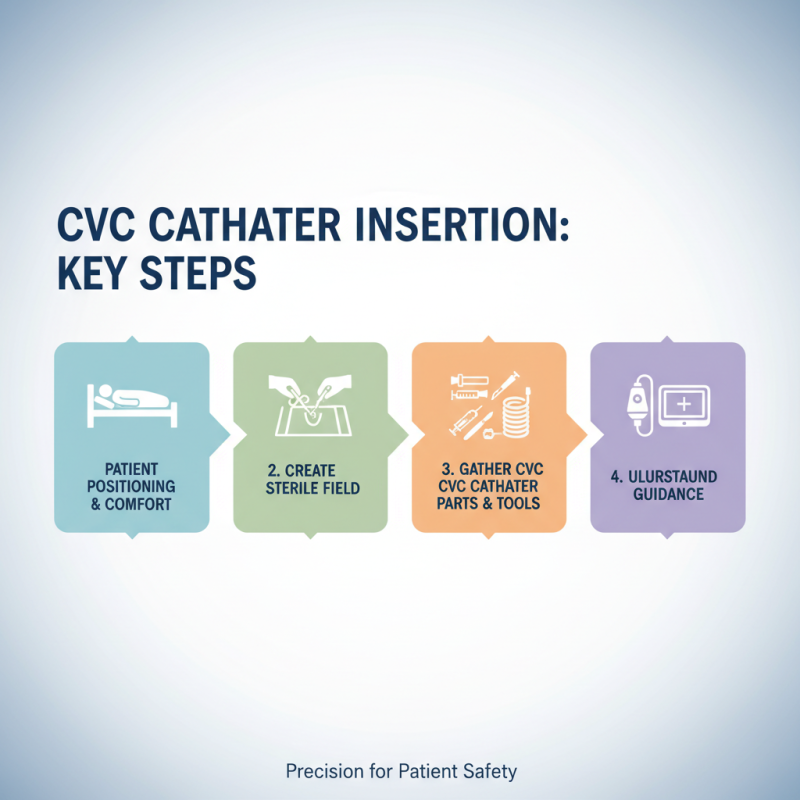
Inserting a CVC catheter is a critical procedure that requires precision. The process begins with proper patient positioning, ensuring comfort and safety. A sterile field is created to minimize infection risks. The healthcare provider gathers all necessary tools, including the Cvc Catheter Parts and an ultrasound machine for guidance.
During the insertion, the provider administers local anesthesia to numb the area. This step is vital for patient comfort. Once prepared, the provider carefully locates a suitable vein, often the jugular or subclavian. A small incision is made, and the CVC catheter parts are threaded into the vein. This requires steady hands and careful monitoring.
The healthcare team observes vital signs throughout the procedure. It's important to be vigilant for any signs of complications, such as bleeding or infection. After insertion, the catheter is secured in place. Dressing is applied to protect the site. The initial steps may seem simple, but they demand focus and reflection on techniques used for improvement. Each procedure builds on the last, promoting better practices in the future.
Potential Risks and Complications Associated with CVC Catheters
Central venous catheters (CVC) are essential in modern medicine, but they come with risks. According to data from the Centers for Disease Control and Prevention (CDC), 15% of patients experience complications related to CVCs. These can include infections, thrombosis, and catheter misplacements. Infections can happen when bacteria enter the bloodstream. Hospital-acquired infections remain a significant issue, with bloodstream infections often linked to CVC use.
Different Cvc Catheter Types also exhibit varying risks. For example, non-tunneled catheters might lead to higher infection rates compared to tunneled ones. A study published in the Journal of the American Medical Association found that non-tunneled CVCs had a 5% chance of infection within the first month. This highlights the importance of proper placement and maintenance. Medical professionals must ensure aseptic techniques to reduce these risks.
Complications can be subtle but dangerous. Catheter occlusion can occur, leading to delayed treatments. Moreover, pneumothorax can result from improper placement, potentially causing serious respiratory issues. There’s a need for ongoing training to address these challenges. Awareness of CVC catheter types and their associated risks is crucial for patient safety. Understanding these details can lead to better outcomes for patients.
Caring for a CVC Catheter: Best Practices
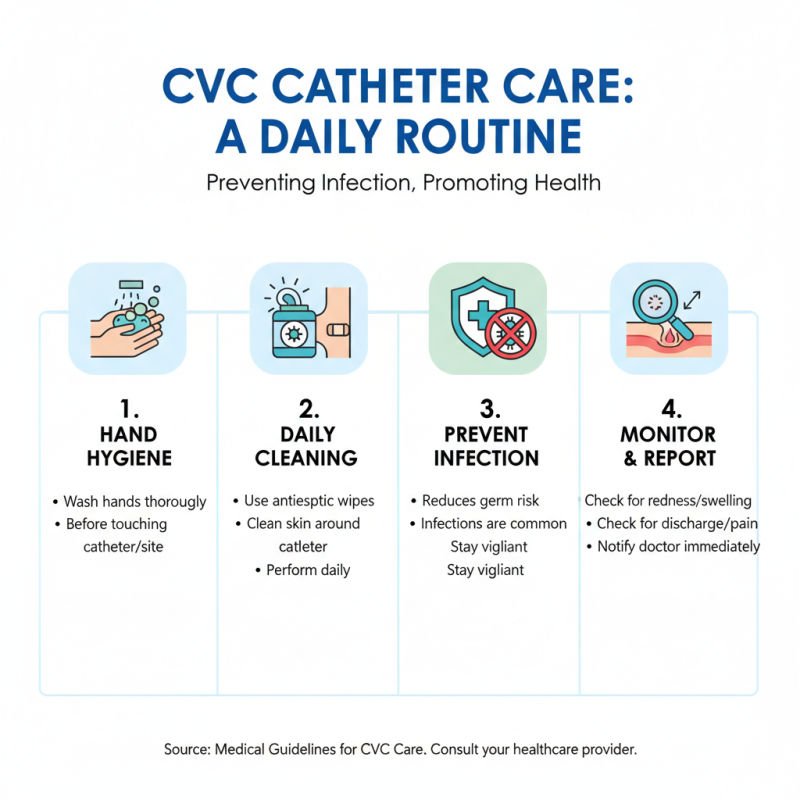
Caring for a CVC catheter requires attention to detail. Cleanliness is essential. Always wash your hands before touching the catheter or the site. Use antiseptic wipes to clean the skin around the catheter daily. It helps prevent infections, which are common with CVCs. Remember, if you notice redness or swelling, address it immediately.
Securing the catheter is also important. Use adhesive dressings to keep it in place. Change the dressing routinely based on your healthcare provider’s instructions. Sometimes, the dressing can lift. This can expose the insertion site and cause problems. Inspect the catheter regularly for signs of wear or leakage.
Flushing the catheter is a key aspect of care. Use a saline solution to maintain patency. Follow the recommended schedule for flushing. Too infrequent can lead to clots, while too frequent can irritate the vein. If discomfort arises during flushing, stop and inform your healthcare provider. Each of these actions plays a role in ensuring safe and effective care for a CVC catheter.
The Essential Guide to One Step Wise Drainage Catheter: Benefits, Usage, and Best Practices
The One Step Wise Drainage Catheter represents a significant advancement in medical technology, particularly in the realm of fluid drainage procedures. Designed specifically for minimally invasive fluid drainage, this innovative device streamlines the process compared to traditional multi-step methods. In critical care environments, where time is of the essence, the ability to quickly and efficiently evacuate fluids can significantly impact patient outcomes. Whether utilized in emergency situations, bedside interventions, or image-guided procedures, the one-step catheter provides healthcare professionals with a reliable and effective tool.
One of the key benefits of the One Step Wise Drainage Catheter is its versatility. Available in various sizes—8F, 10F, 12F, and 14F—this device can be tailored to meet the specific needs of different clinical scenarios. The design ensures that medical practitioners can perform drainage procedures with greater ease and reduced complication rates. By minimizing the steps involved in the drainage process, this catheter not only enhances operational efficiency but also improves patient comfort during procedures. As healthcare continues to evolve, the adoption of such innovative solutions will likely become increasingly essential in delivering high-quality care.
FAQS
: You can find a wide variety of products, including household items and personal care goods.
Most online shopping platforms use secure payment methods, but risks can still exist.
After placing an order, you will receive a tracking number via email.
Check the tracking information. If there's still a delay, contact the customer service team.
Most retailers allow returns within a specific period. Be sure to check the return policy.
Contact customer service. They will often arrange for a replacement or refund.
Some platforms allow guest checkout, but creating an account may offer benefits.
Always check for additional charges like shipping or handling fees before payment.
Changes depend on the retailer's policy. Act quickly, as many orders are processed fast.
Read customer reviews and ratings. This can help gauge product experience and quality.
Conclusion
A CVC catheter, or central venous catheter, is a medical device used for accessing the central venous system. It is typically made from flexible materials designed to minimize complications during insertion and function. There are several types of CVC catheters, including single-lumen, double-lumen, and triple-lumen, each serving specific medical purposes such as long-term medication administration, blood sampling, or transfusions.
The procedure for inserting a CVC catheter requires careful consideration of indications, such as the need for frequent intravenous medications, fluid administration, or monitoring hemodynamic status. Despite its benefits, the placement of a CVC catheter carries potential risks and complications, including infection and thrombosis. Proper care and maintenance practices are essential to enhance the catheter's longevity and reduce complications, ensuring safer patient outcomes during treatment.